

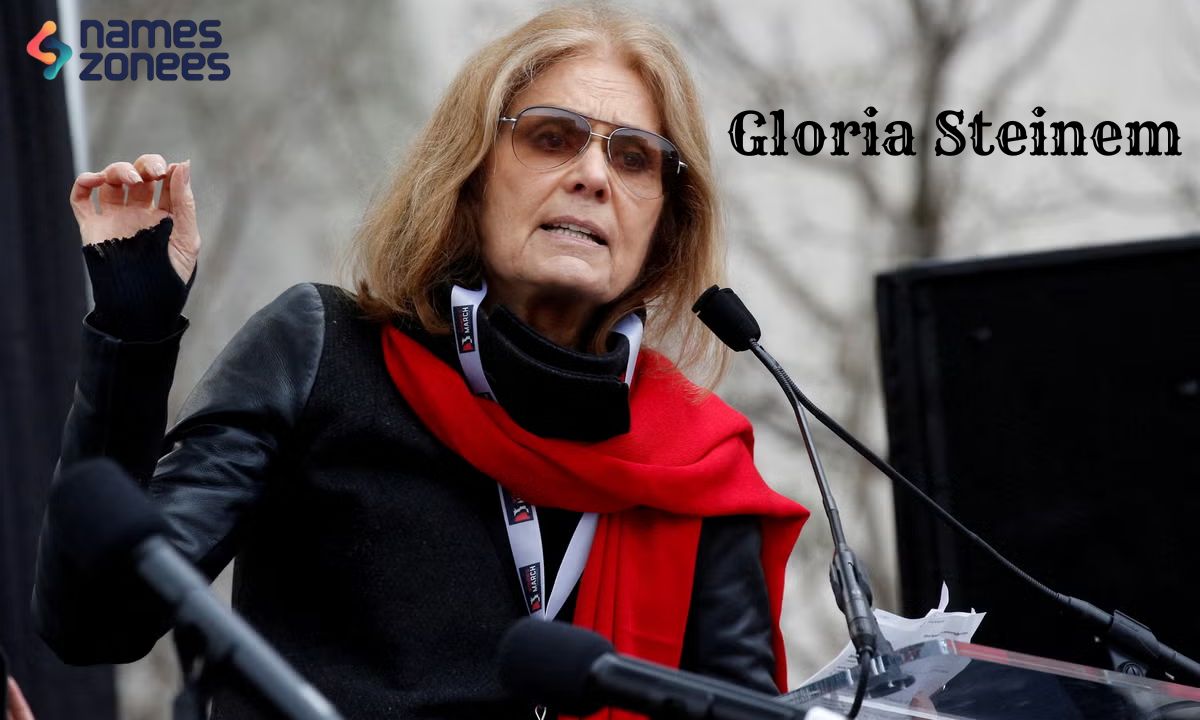
Gloria Steinem was an American journalist, writer, organizer, and feminist leader whose work helped transform the modern women’s movement. Born in 1934, she spent more than six decades challenging discrimination, advocating for reproductive freedom, and creating platforms where women could speak openly about their lives. Gloria Steinem died peacefully at her home in New York City on September 2, 2026, at age 92, according to a statement from her foundation.
For readers searching for Gloria Steinem’s biography, her life offers much more than a story of political activism. Her journalism, books, organizing, and institution-building shaped public conversations about gender equality in the United States and beyond. This biography explores her childhood, rise in journalism, role in the women’s movement, reproductive-rights advocacy, political activism, and the lasting influence she leaves behind.
Who Was Gloria Steinem?
Gloria Steinem was one of the most recognizable leaders of the American feminist movement. She combined investigative journalism with political organizing and public speaking, becoming a prominent voice for gender equality, reproductive rights, racial justice, and broader social change. Her career stretched from freelance journalism in the late 1950s to activism that continued well into her 90s.
Gloria Steinem also helped establish organizations that gave the women’s movement lasting institutional support. She co-founded Ms. magazine, the National Women’s Political Caucus, the Ms. Foundation for Women, and the Women’s Media Center, among other organizations.
Her influence was recognized nationally when President Barack Obama awarded her the Presidential Medal of Freedom in 2013. She also received major journalism honors, including the National Magazine Award and a Lifetime Achievement in Journalism Award from the Society of Professional Journalists.
Gloria Steinem’s Early Life
Gloria Steinem was born on March 25, 1934, in Toledo, Ohio, to Leo and Ruth Steinem. Her father worked as a traveling salesman and antique dealer, and the family spent periods traveling around the country in a trailer. Because of that unusual childhood, Steinem did not attend school regularly until she was older.
Her parents separated when she was young. After the divorce, she spent years helping care for her mother, Ruth, who struggled with mental illness. That experience exposed Steinem early to the difficulties faced by women who lacked economic security and social support.
She later attended Smith College in Massachusetts, where she studied government and graduated magna cum laude in 1956. A Chester Bowles Fellowship enabled her to travel to India, where she spent roughly two years studying and researching. The experience strengthened her interest in grassroots organizing and social activism.
Her education and travels gave her a wider understanding of inequality. Rather than treating politics as something limited to government institutions, she increasingly viewed social change as something shaped by ordinary people and community organization.
How Steinem Started Her Journalism Career
Gloria Steinem entered professional journalism at a time when American newsrooms were heavily dominated by men. Women were frequently pushed toward lifestyle features and “women’s pages,” while political and investigative assignments were harder to obtain. Steinem repeatedly challenged those expectations.
She began freelancing in New York during the late 1950s and gradually earned more substantial assignments. In 1962, one of her important early pieces examined the impact of birth-control pills on young women and the choices they faced between professional ambitions and traditional expectations surrounding family life.
Her national breakthrough came in 1963, when she worked undercover as a Playboy Bunny at Hugh Hefner’s Playboy Club in New York. Her resulting two-part investigation, “A Bunny’s Tale,” exposed the low pay, demanding working conditions, and treatment of women employed at the club.
The assignment brought Steinem considerable attention, but it also complicated her effort to establish herself as a serious journalist. She later reflected on how the Playboy story affected perceptions of her work. Nevertheless, the investigation became one of the defining journalistic episodes of her early career.
In 1968, she helped launch New York magazine and worked as a political writer and editor. Her reporting increasingly focused on political campaigns, social issues, and the emerging women’s liberation movement.
Steinem’s Rise as a Feminist Leader
Gloria Steinem’s transition from journalist to feminist leader developed gradually. Journalism gave her a public platform, but activism gave her a larger role in organizing people and building political pressure.
A turning point came in 1969, when she attended an abortion speak-out in New York. Women publicly shared experiences with illegal abortions, and Steinem later described the event as transformative. She began speaking more openly about reproductive freedom and became increasingly involved in feminist organizing.
Her public profile grew rapidly during the early 1970s. She traveled widely, spoke at colleges and community events, appeared in national media, and worked with activists from different backgrounds. Her ability to communicate complicated political issues in accessible language helped make feminism more visible to a mainstream audience.
Steinem also emphasized that women’s equality could not be separated from racial and economic inequality. She worked alongside Black feminists and other civil-rights activists, increasingly arguing that the movement needed to address multiple forms of discrimination rather than focusing on one group of women.
Gloria Steinem and the Women’s Movement
Gloria Steinem became one of the most visible figures of second-wave feminism in the United States. She advocated for equal opportunities, economic independence, reproductive freedom, political representation, and an end to discriminatory social expectations.
Her activism coincided with major changes in American law and culture. During the broader women’s movement, issues involving equal pay, education, credit, employment discrimination, sexual harassment, and reproductive rights moved increasingly into national political debate.
Steinem was not the only leader of this movement. She worked alongside figures including Betty Friedan, Shirley Chisholm, Bella Abzug, Dorothy Pitman Hughes, Florynce Kennedy, and many others. Her particular contribution was her ability to connect journalism, organizing, and mass communication.
She also became a subject of criticism within feminism. Some critics argued that the media elevated her partly because she was young, white, attractive, and highly articulate. Steinem acknowledged these criticisms while continuing to argue for a movement that included women across racial, economic, and cultural lines.
Reproductive Rights and Bodily Autonomy
Reproductive freedom became one of Gloria Steinem’s most important causes. Her public advocacy was shaped partly by her own experience of having an abortion in London when she was 22 and by the women she encountered during the 1969 abortion speak-out.
She argued that reproductive decisions were inseparable from women’s independence. Access to contraception and abortion, in her view, affected whether women could control their education, careers, relationships, finances, and futures.
Her activism continued as abortion and reproductive rights became increasingly polarized in American politics. She supported organizations and political efforts that sought to protect reproductive choice and opposed restrictions that she believed undermined women’s autonomy.
The issue remained central to her public work for decades. Even as legal and political circumstances changed, Steinem maintained that bodily autonomy was a fundamental part of equality.
Read More: https://nameszonees.com/cow-names/
Founding of Ms. Magazine
One of Gloria Steinem’s most enduring achievements was her role in founding Ms. magazine. She worked with Patricia Carbine, Letty Cottin Pogrebin, Dorothy Pitman Hughes, and other collaborators to create a publication that treated women’s lives and political concerns as serious subjects rather than narrow lifestyle topics.
The first issue appeared in 1971 as an insert in New York magazine. Ms. became an independent magazine in 1972 and quickly became an influential platform for feminist journalism and commentary.
The publication covered subjects ranging from reproductive rights and workplace discrimination to domestic violence, politics, culture, and personal identity. It gave readers a place to encounter ideas that mainstream magazines often ignored or treated superficially.
Steinem remained involved with Ms. for many years, serving as an editor and writer before later continuing in an emeritus role. The magazine became one of the most recognizable institutions associated with the modern feminist movement.
Steinem’s Most Influential Writing
Gloria Steinem’s writing helped introduce feminist ideas to broad American audiences. Her work often combined personal observation, political analysis, humor, and investigative reporting.
Among her best-known pieces was “A Bunny’s Tale,” the 1963 investigation that examined the working conditions at the Playboy Club. The article demonstrated how investigative journalism could reveal broader problems involving gender, labor, and power.
She later produced essays that became important parts of feminist literature, including “If Men Could Menstruate,” which used satire to expose assumptions surrounding menstruation and gender. She also wrote “After Black Power, Women’s Liberation,” an influential piece connecting racial politics and women’s liberation.
Her books included Outrageous Acts and Everyday Rebellions, Revolution from Within, Moving Beyond Words, My Life on the Road, and The Truth Will Set You Free, But First It Will Piss You Off. Her official biography also lists An Unexpected Life among her works.
Through journalism and books, Steinem consistently argued that personal experiences could reveal larger social structures. That approach became an important feature of feminist writing.
Gloria Steinem’s Political Activism
Gloria Steinem did not limit her activism to women’s issues. Over the decades, she participated in civil-rights campaigns, peace activism, labor-related causes, and efforts addressing discrimination and inequality.
She helped organize campaigns supporting the Equal Rights Amendment and worked with diverse political and community groups. Her activism also extended to opposition to apartheid, with Steinem arrested in 1984 during a protest outside the South African embassy in Washington, D.C.
She was also involved in political campaigns and became a prominent supporter of Hillary Clinton. During the presidency of Donald Trump, Steinem emerged as a vocal critic and participated in the Women’s March on Washington in January 2017.
Her political record was not without controversy. In 1998, she wrote an opinion piece defending President Bill Clinton against sexual-harassment allegations. Years later, she acknowledged that she would not write the same argument in the same way, reflecting changes in her thinking and the broader public understanding of sexual misconduct.
National Women’s Political Caucus
Gloria Steinem helped establish the National Women’s Political Caucus in 1971 alongside activists and political leaders including Bella Abzug, Shirley Chisholm, and Betty Friedan. The organization was created to increase women’s political participation and support candidates committed to gender equality.
The caucus represented an important shift in feminist organizing. Rather than simply demanding change from existing political institutions, activists sought to increase women’s direct influence within those institutions.
Steinem’s involvement reflected her belief that lasting social change required both grassroots activism and political participation. The organization continues to be associated with efforts to advance women’s representation in public office.
Gloria Steinem’s Lasting Legacy
Gloria Steinem leaves behind a legacy that extends far beyond any single article, organization, or political campaign. She helped make feminism a mainstream subject of American journalism and public debate while building institutions that continued the work beyond her individual career.
Her organizations created lasting platforms for advocacy, media representation, and political participation. The Women’s Media Center, for example, was founded in 2004 by Steinem, Jane Fonda, and Robin Morgan to promote stronger representation of women in media.
Her influence was also recognized through numerous honors. In addition to the Presidential Medal of Freedom, her journalism earned awards including the Penney-Missouri Journalism Award, Front Page and Clarion awards, and the National Magazine Award.
Gloria Steinem’s approach also evolved over time. She increasingly emphasized listening to people whose experiences differed from her own and highlighted the importance of racial and economic inclusion within feminism.
Her death at 92 marks the end of one of the most recognizable careers in modern American feminism. Her foundation announced that she died peacefully at her New York City home on September 2, 2026, surrounded by people who loved her; no cause of death was announced.
Why Gloria Steinem Still Matters Today
Gloria Steinem remains relevant because many of the questions she brought into public discussion continue to shape American life. Debates over reproductive rights, workplace equality, political representation, gender discrimination, and media portrayals of women remain active.
Her career also demonstrates how journalism can become a tool for social change. She used reporting to expose workplace inequality, writing to challenge cultural assumptions, and organizing to turn public awareness into political action.
Perhaps her most significant lesson was that movements are larger than individual personalities. Although Steinem became one of feminism’s best-known public faces, she repeatedly worked through coalitions, publications, advocacy organizations, and community networks.
The institutions she helped establish give her work a life beyond her own. That combination of journalism, activism, and organization explains why her influence reaches multiple generations.
Frequently Asked Questions
When did Gloria Steinem die?
Gloria Steinem died on September 2, 2026, at her home in New York City at age 92.
Her foundation announced that she died peacefully, without publicly stating a cause of death.
What was Gloria Steinem best known for?
Gloria Steinem was best known as a journalist, feminist organizer, writer, and advocate for gender equality.
She co-founded Ms. magazine and helped establish several major feminist organizations.
What did Gloria Steinem do before becoming a feminist leader?
Gloria Steinem began her career as a freelance journalist and pursued political and investigative reporting.
Her 1963 undercover investigation at the Playboy Club became one of her earliest nationally recognized assignments.
Did Gloria Steinem write any books?
Yes, Gloria Steinem authored several influential books, including My Life on the Road and Outrageous Acts and Everyday Rebellions.
Her writing explored feminism, politics, identity, personal growth, and social inequality.
What organizations did Gloria Steinem help found?
Gloria Steinem helped found Ms. magazine, the National Women’s Political Caucus, the Ms. Foundation for Women, and the Women’s Media Center.
These organizations expanded feminist journalism, political participation, advocacy, and opportunities for women.
Conclusion
Gloria Steinem’s career transformed the way millions of Americans discussed women’s rights, political participation, and personal autonomy. Through journalism, she exposed inequalities that were often overlooked; through organizing, she helped build institutions capable of sustaining feminist activism beyond individual campaigns. Her work earned major journalism honors and the Presidential Medal of Freedom, reflecting her influence on American public life.
Gloria Steinem’s death at 92 closes a remarkable chapter in the history of modern feminism, but it does not diminish the relevance of the ideas she spent decades advancing. Her publications, organizations, writing, and example continue to shape conversations about equality and social justice. Her legacy ultimately rests not only on the causes she championed, but on the generations of activists, writers, and organizers she encouraged to keep challenging unequal systems.

Jack Smith explores ideas, shares knowledge, and creates content that inspires curiosity and everyday learning.